Share
Are Hybrid Cars Worth It?
A Guide for New Zealand Drivers
Are Hybrid Cars Worth It? A Guide for New Zealand Drivers
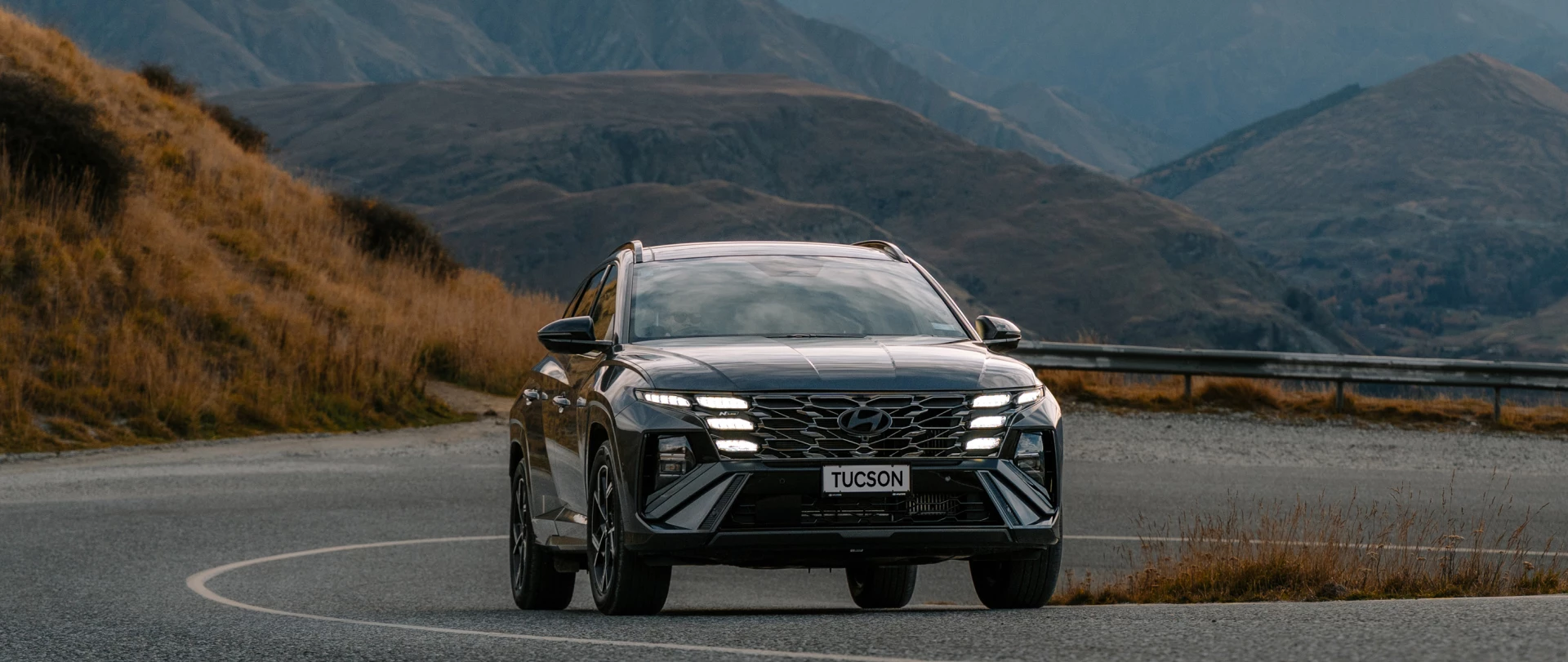
A Hyundai Hybrid combines the efficiency of electric power with the convenience of a petrol engine, giving you a smarter way to drive without needing to plug in.
Yes, hybrid cars can be worth it for many New Zealand drivers. They can offer lower fuel consumption than comparable petrol vehicles while still giving you the convenience of a petrol engine, without needing to plug the vehicle in to recharge. For drivers who want to reduce fuel use without moving to a fully electric vehicle, a hybrid can be a practical middle ground.
Whether a hybrid is right for you depends on how you drive, the type of vehicle you need and how much you value fuel efficiency.
What is a hybrid car?
A hybrid car combines a petrol engine with an electric motor and battery.
The vehicle can use the petrol engine, electric motor or a combination of both depending on the driving conditions. When you slow down or brake, the vehicle can also recover some of the energy that would otherwise be lost and use it to recharge the hybrid battery.
Unlike a fully electric vehicle, a conventional hybrid does not need to be plugged into a wall or charging station.
What are the benefits of a hybrid car?
1. Use less fuel
Hyundai Hybrid technology is designed to help you use less fuel by combining petrol and electric power.
2. No charging required
Unlike a fully electric vehicle, Hyundai's conventional hybrids don't need to be plugged in. The system recovers energy as you drive.
3. Great for everyday driving
Hybrid technology can be particularly effective in stop-start urban driving, where the electric motor can assist the petrol engine and regenerative braking can recover energy.
4. Go further between fuel stops
Using less fuel can mean fewer trips to the petrol station — particularly valuable when you're driving regularly.
5. You don't have to change the way you drive
Fill up with petrol and go. There's no need to plan your journey around charging infrastructure.
Hybrid FAQ's
Are hybrid cars cheaper to run?


A hybrid can cost less to run than a comparable petrol vehicle because it can use less fuel.
However, the overall running cost depends on several factors, including the vehicle's purchase price, fuel consumption, petrol prices, servicing, insurance, tyres and how much you drive.
If you drive a lot of kilometres each year, fuel efficiency can become a particularly important consideration when choosing your next vehicle.
However, the overall running cost depends on several factors, including the vehicle's purchase price, fuel consumption, petrol prices, servicing, insurance, tyres and how much you drive.
If you drive a lot of kilometres each year, fuel efficiency can become a particularly important consideration when choosing your next vehicle.
Are hybrid cars good for city driving?
Yes. Hybrid vehicles can be particularly well suited to city and urban driving.
Stop-start traffic gives the hybrid system more opportunities to use electric motor assistance and recover energy through regenerative braking.
This can help a hybrid use less fuel than a comparable petrol vehicle in the same type of driving.
Stop-start traffic gives the hybrid system more opportunities to use electric motor assistance and recover energy through regenerative braking.
This can help a hybrid use less fuel than a comparable petrol vehicle in the same type of driving.
Are hybrid cars good for long-distance driving?
Yes. Hybrid vehicles are great for long-distance driving.
A conventional hybrid uses a petrol engine alongside its electric motor, meaning you don't need to stop and recharge the battery during a road trip.
For New Zealand drivers who regularly combine urban driving with longer highway journeys, a hybrid can provide a balance between fuel efficiency and long-distance convenience.
A conventional hybrid uses a petrol engine alongside its electric motor, meaning you don't need to stop and recharge the battery during a road trip.
For New Zealand drivers who regularly combine urban driving with longer highway journeys, a hybrid can provide a balance between fuel efficiency and long-distance convenience.
Do hybrid cars need to be charged?
No. A conventional hybrid does not need to be plugged in.
The hybrid battery is recharged while you drive. Energy recovered during braking and deceleration can be stored in the battery and used by the electric motor.
This is one of the key differences between a conventional hybrid and a plug-in hybrid or fully electric vehicle.
The hybrid battery is recharged while you drive. Energy recovered during braking and deceleration can be stored in the battery and used by the electric motor.
This is one of the key differences between a conventional hybrid and a plug-in hybrid or fully electric vehicle.
How long do hybrid batteries last?
Battery performance can also depend on factors such as vehicle age, usage and operating conditions.
Are hybrid cars reliable?
Hybrid vehicles use established technology that combines an internal combustion engine with an electric motor and battery system.
As with any vehicle, reliability depends on the individual vehicle, maintenance and how it is used. Following the manufacturer's recommended servicing schedule is important for maintaining the vehicle over time.
As with any vehicle, reliability depends on the individual vehicle, maintenance and how it is used. Following the manufacturer's recommended servicing schedule is important for maintaining the vehicle over time.
Is a hybrid better than a petrol car?
There isn't one answer that is right for every driver.
A hybrid may be a better choice if you prioritise:
Lower fuel consumption
Efficient urban driving
Reduced fuel use without changing how you refuel
Smooth and quiet driving
The ability to travel long distances without relying on charging infrastructure
A petrol vehicle may still suit drivers whose priorities, driving patterns or budget make a conventional petrol vehicle the better option.
The best choice depends on how and where you drive.
A hybrid may be a better choice if you prioritise:
Lower fuel consumption
Efficient urban driving
Reduced fuel use without changing how you refuel
Smooth and quiet driving
The ability to travel long distances without relying on charging infrastructure
A petrol vehicle may still suit drivers whose priorities, driving patterns or budget make a conventional petrol vehicle the better option.
The best choice depends on how and where you drive.
Is a hybrid better than an electric vehicle?
A hybrid and an electric vehicle are designed for different driving needs.
A hybrid combines a petrol engine and electric motor, while a fully electric vehicle is powered entirely by electricity.
A hybrid may suit drivers who want improved fuel efficiency but don't want to rely on charging infrastructure. An electric vehicle may suit drivers who are comfortable charging their vehicle and want to eliminate petrol use.
A hybrid combines a petrol engine and electric motor, while a fully electric vehicle is powered entirely by electricity.
A hybrid may suit drivers who want improved fuel efficiency but don't want to rely on charging infrastructure. An electric vehicle may suit drivers who are comfortable charging their vehicle and want to eliminate petrol use.
Which Hyundai hybrid is right for me?
Hyundai offers hybrid powertrains across selected SUV models in New Zealand, giving drivers the option to choose a hybrid without necessarily changing the type of vehicle they need.
The right Hyundai hybrid depends on factors such as:
- How many people you regularly carry
- How much luggage or cargo space you need
- Whether you need to tow
- How much city driving you do
- How frequently you take longer road trips
- Your preferred vehicle size and features
Explore the Hyundai hybrid range to compare the available models and find the vehicle that best matches your needs.
Hyundai Hybrid FAQs
Are Hyundai Hybrids worth it?
For many New Zealand drivers, a Hyundai Hybrid can be a smart choice if you want to use less fuel without changing the way you drive. Hyundai Hybrids combine a petrol engine with an electric motor to improve efficiency, particularly in stop-start driving, while still giving you the convenience and range of a petrol vehicle. There is also no need to plug in your Hyundai Hybrid to recharge the battery.
How does a Hyundai Hybrid work?
A Hyundai Hybrid combines a petrol engine, electric motor and hybrid battery. The vehicle automatically manages these power sources depending on the driving conditions. At lower speeds, the electric motor can provide power, while the petrol engine and electric motor can work together when more performance is required. Energy recovered during braking and deceleration is stored in the battery and used to help power the vehicle.
Do Hyundai Hybrids need to be plugged in?
No. Hyundai's conventional Hybrid vehicles do not need to be plugged in. The hybrid battery is charged automatically as you drive through regenerative braking and the petrol engine. This means you can simply fill up with petrol and drive, without needing to install a home charger or plan your journey around charging stations.
Are Hyundai Hybrids good for city driving?
Yes. Hyundai Hybrids are particularly well suited to city and stop-start driving. The electric motor can provide more assistance at lower speeds, while regenerative braking recovers energy that can be stored in the hybrid battery. This can help reduce fuel consumption during urban driving.
Are Hyundai Hybrids good for long-distance driving?
Yes. Hyundai Hybrids are designed for both everyday urban driving and longer journeys. The petrol engine provides the range and convenience needed for open-road travel, while the electric motor can assist the engine to improve efficiency. Because conventional Hyundai Hybrids don't need to be plugged in, you can travel long distances without planning stops to recharge.
Do Hyundai Hybrids use less fuel?
Yes. Hyundai Hybrids are designed to use less petrol than comparable petrol-only vehicles. By combining electric motor assistance with the petrol engine, the hybrid system can reduce the amount of fuel required, particularly during lower-speed and stop-start driving. Actual fuel consumption will vary depending on the model, driving conditions, driving style and other factors.
How does regenerative braking work in a Hyundai Hybrid?
Regenerative braking allows the hybrid system to recover energy when the vehicle slows down. Instead of allowing all of this energy to be lost as heat through conventional braking, the electric motor can operate as a generator, converting some of the vehicle's kinetic energy into electrical energy. That energy is stored in the hybrid battery and can later be used to help power the vehicle.
Are Hyundai Hybrids expensive to service?
Hyundai Hybrids are designed to be straightforward to own and maintain. Routine servicing is carried out through the Hyundai dealer network by trained Hyundai technicians using genuine Hyundai parts. Hyundai also states that regenerative braking can help reduce wear on conventional brake components.
The cost and servicing requirements will vary by model, so it's best to check the recommended service schedule for the Hyundai Hybrid you're considering.
The cost and servicing requirements will vary by model, so it's best to check the recommended service schedule for the Hyundai Hybrid you're considering.
Which Hyundai Hybrid is best for a family?
The SANTA FE Hybrid is a strong choice for families who need more space and flexibility. It is available with six or seven seats and combines a 1.6-litre turbo petrol hybrid powertrain with HTRAC all-wheel drive. The SANTA FE Hybrid produces a combined 172 kW and has a stated combined fuel consumption of 6.2L/100km under WLTP testing.
For smaller families, the TUCSON Hybrid offers a more compact SUV format, while the KONA Hybrid is suited to drivers who want a smaller, urban-focused SUV.
For smaller families, the TUCSON Hybrid offers a more compact SUV format, while the KONA Hybrid is suited to drivers who want a smaller, urban-focused SUV.
Which Hyundai Hybrid is best for city driving?
The KONA Hybrid is a great option for drivers looking for a compact SUV suited to urban life. Its smaller SUV footprint makes it easy to manoeuvre around town, while its hybrid powertrain is designed to improve efficiency in everyday driving.
The TUCSON Hybrid is another option for drivers who want more interior space while still benefiting from Hyundai Hybrid technology.
The TUCSON Hybrid is another option for drivers who want more interior space while still benefiting from Hyundai Hybrid technology.
Can a Hyundai Hybrid tow?
Yes, Hyundai Hybrid models can tow. Towing capacity varies by model and specification, so it's important to check the towing capacity of the specific vehicle you're considering.
For example, the SANTA FE Hybrid is equipped with HTRAC all-wheel drive and is designed to provide a combination of efficiency and capability. Always refer to the vehicle's current specifications and owner's documentation for the applicable towing limits.
For example, the SANTA FE Hybrid is equipped with HTRAC all-wheel drive and is designed to provide a combination of efficiency and capability. Always refer to the vehicle's current specifications and owner's documentation for the applicable towing limits.
What Hyundai Hybrid SUVs are available in New Zealand?
Hyundai offers Hybrid powertrains across several SUV models in New Zealand. The current Hyundai Hybrid SUV range includes:
KONA Hybrid — a compact SUV suited to urban driving and everyday use.
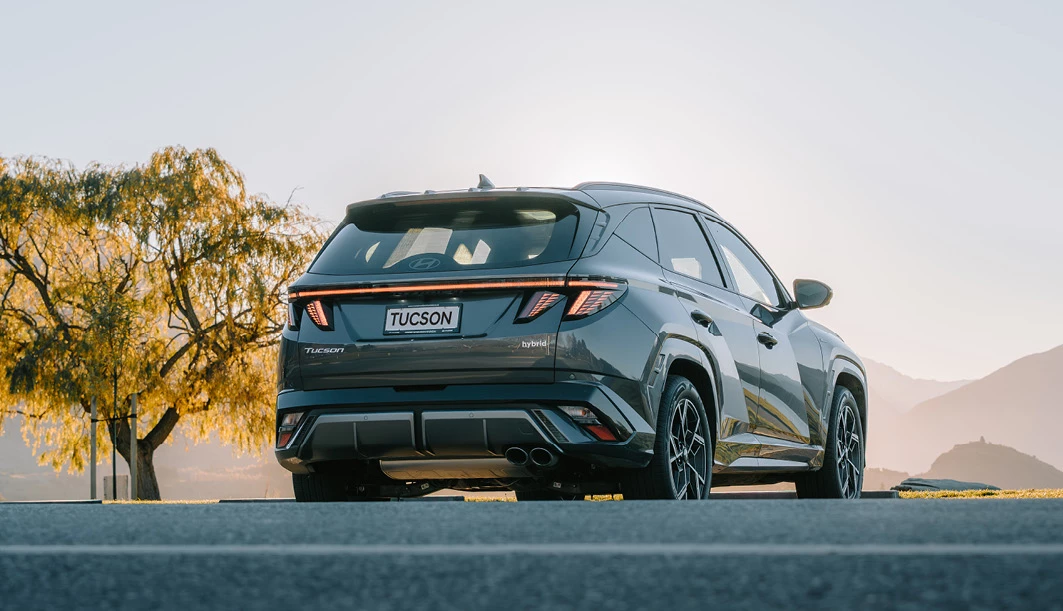
TUCSON Hybrid — a medium SUV offering more space and versatility for everyday family life.
SANTA FE Hybrid — a large SUV available with six or seven seats, designed for families who need more space and capability.
Hyundai has also introduced Hybrid technology to the PALISADE, bringing a Hybrid powertrain to Hyundai's flagship SUV.
KONA Hybrid — a compact SUV suited to urban driving and everyday use.
TUCSON Hybrid — a medium SUV offering more space and versatility for everyday family life.
SANTA FE Hybrid — a large SUV available with six or seven seats, designed for families who need more space and capability.
Hyundai has also introduced Hybrid technology to the PALISADE, bringing a Hybrid powertrain to Hyundai's flagship SUV.
Is a Hyundai Hybrid right for me?
A Hyundai Hybrid could be a good choice if you want lower fuel consumption, the convenience of petrol-powered driving and the benefits of electric motor assistance without needing to plug in.
Whether you choose KONA, TUCSON, SANTA FE or PALISADE Hybrid, Hyundai's Hybrid range gives you the opportunity to choose a vehicle size and level of practicality that suits your lifestyle while making the switch to more efficient driving.
Whether you choose KONA, TUCSON, SANTA FE or PALISADE Hybrid, Hyundai's Hybrid range gives you the opportunity to choose a vehicle size and level of practicality that suits your lifestyle while making the switch to more efficient driving.